
Based in Cornwall
Dry Ice Blasting for Production Machinery
Restore production equipment with non-abrasive cleaning that removes contamination while helping maximise operational uptime.
Production machinery
Machines run cooler, cleaner and longer
Build-up on motors, drives, gearboxes and guarding does two things at once. It insulates heat, so components run hotter than they were specified to. And it hides the early signs of wear, so a developing fault is discovered as a breakdown rather than as a finding on an inspection sheet.
The conventional response makes both worse. Pressure washing drives water and contamination into bearings, seals and electrics. Degreasers create a waste stream and leave film behind. Anything involving strip-down costs more downtime than the clean itself, which is why it keeps getting deferred.
Dry ice blasting removes the deferral. Solid CO₂ pellets are accelerated at the surface; on impact each pellet sublimes, lifting oil, grease and contamination away without abrasion. No moisture into the machine. No media to recover. No secondary waste.
Our equipment
Industrial-grade air, precisely controlled
Machinery work exposes weak equipment quickly. Undersized compressors lose pressure through a long job and introduce moisture into the air stream, which is the one thing you do not want anywhere near a bearing housing or a control enclosure.
Kaeser and Boge compressors hold constant airflow at constant pressure from the first minute to the last. Tundra air dryers keep the supply dry. M-class extraction and containment screening keep dislodged contamination off adjacent plant and finished stock.
Every asset is assessed before configuration: substrate, contamination, access and operating condition. Pellet size, flow rate and pressure are then set around what is in front of us. Gentle on a sensor housing or painted casing. Firm on baked grease and compacted debris.
Services
Every service, one method
Every service on this page uses the same dry ice CO₂ process. No abrasives. No moisture. No chemicals. Work is scoped against your maintenance plan and your isolation procedure.
Drives & transmission
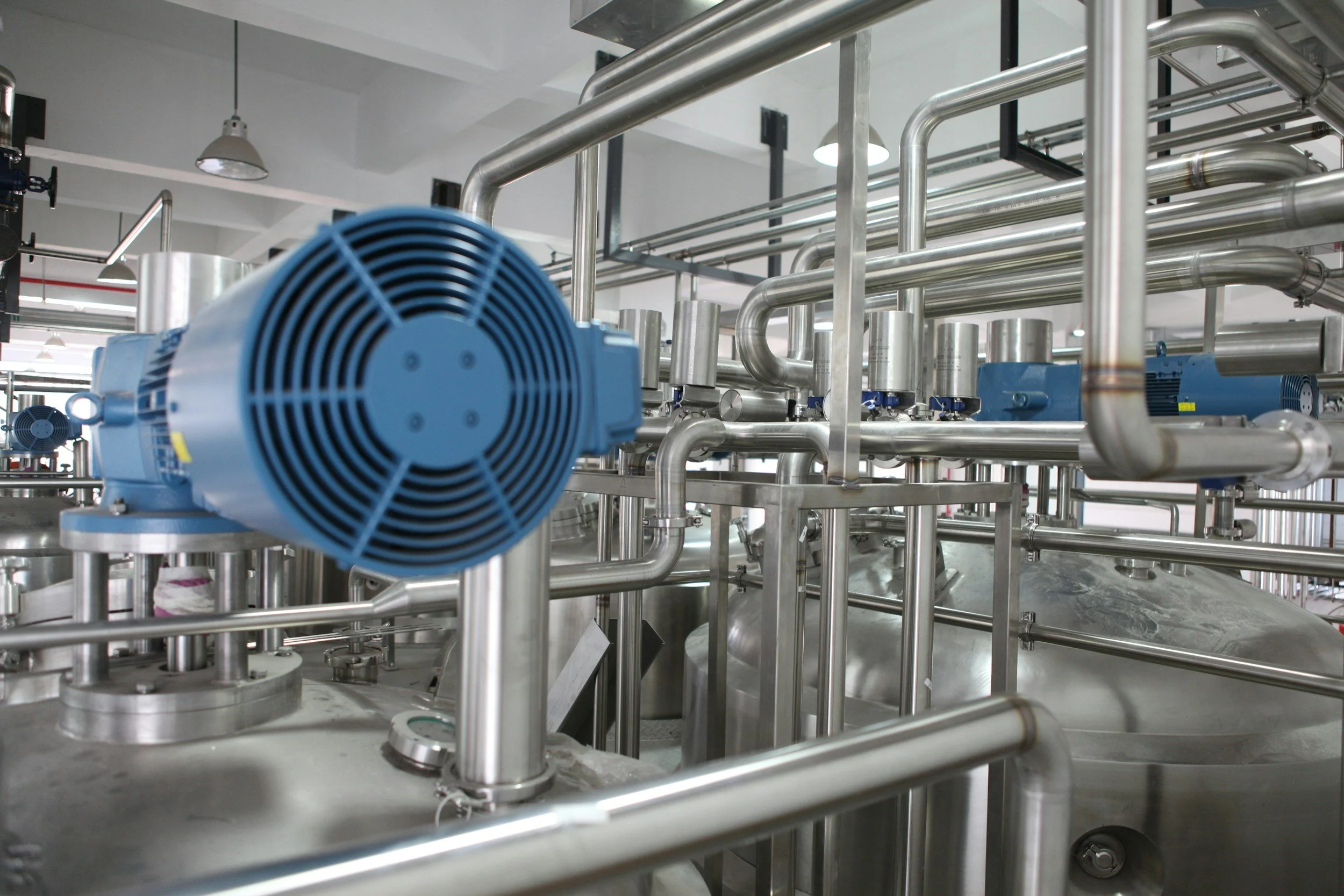
Motors & drive units
Casings, cooling fins, terminal boxes and mounts cleaned without moisture or masking. Restoring airflow to a motor is thermal efficiency and asset life in one job.
Gearboxes & reducers
Casings, breathers, cooling surfaces and mounting faces. Oil leaks become visible again, which turns an unknown into a scheduled repair.
Chains, sprockets & belts
Drive chains, sprockets, tensioners and belt paths cleaned of compacted grease and product residue without disassembly.
Bearing housings & plummer blocks
Housings, seals and adjacent surfaces cleaned with nothing driven past the seal. Condition and leak paths exposed for inspection.
Couplings & guards
Couplings, coupling guards and drive covers, cleaned in place so what they cover remains accessible and inspectable.
Machine bodies & systems
CNC interiors & ways
Enclosure interiors, way covers, chip guards, fixtures and coolant paths. Swarf, coolant residue and oil film removed dry, without flooding the machine.
Hydraulic & pneumatic units
Power packs, manifolds, cylinders, hoses and valve blocks. Oil contamination removed so leaks are traceable and heat rejection is restored.
Packaging machinery
Formers, sealing jaws, film paths, cartoners and vibratory feeders cleaned of adhesive, product residue and film debris.
Pumps & compressors
Housings, cooling surfaces, coolers, frames and skids. Contamination removed from the surfaces responsible for keeping the unit within temperature.
Control enclosures
Cabinets, backplates, terminals and cable entries cleaned dry and non-conductively, with no component removal or masking required.
How we programme it
Planned maintenance clean
A scheduled interval that keeps build-up below the level at which it affects temperature, and keeps developing faults visible.
Pre-inspection clean
Cleaning ahead of thermographic survey, vibration analysis, statutory inspection or insurance inspection, so the survey reads the asset.
Recommissioning after storage
Machinery brought out of long-term storage or relocation cleaned of surface corrosion, dust and old grease before it is put back into service.
Post-breakdown clean
Cleaning around a failure so the root cause, the leak path and the collateral contamination are all visible before the repair is specified.
Pre-sale & handover clean
Preparation for asset sale, lease return, relocation or customer handover, where condition needs to be demonstrable rather than described.
What it delivers
Four reasons maintenance teams programme this in
Cleaning machinery properly is not housekeeping. It is a measurable intervention in how long the asset lasts.
Designed cooling restored
Contamination is insulation. Clearing fins, housings and cooling paths returns heat rejection to specification and reduces running temperature.
Wear made visible
A clean machine shows leaks, cracks, fretting and misalignment early, while they are still repairs rather than failures.
Surveys that mean something
Thermographic and visual inspection on a contaminated asset reads the contamination. On a clean asset it reads the machine.
No strip-down, no drying
Cleaning in place, often in operation, removes the downtime and reassembly risk that made cleaning easy to postpone.
Removing contamination build-up restores airflow and thermal efficiency, extends asset life, and eliminates the combustible residue that accumulates around heat sources and moving parts.
Coverage
Nationwide, fully mobile
Compressor, dry ice blasters, M-class extraction and containment screening all travel with us. There is no fixed geography. A plant in Yorkshire gets the same process as one in Devon.
In shutdown
Programmed into your downtime
Work packaged into planned maintenance windows, weekends or shutdowns. Nothing is left wet, so restart is not waiting on the clean.
In operation
Cleaned live, in place
Where guarding and isolation allow, machinery is cleaned running or hot. Containment and M-class extraction manage the working area around live plant.
No disassembly
Cleaned in place, without taking the machine apart
Most machinery cleaning is priced as a strip-down. Remove the guards, break the couplings, drop the covers, clean, dry, reassemble, re-align, re-commission. The cleaning is a small part of that. The rest is why it does not happen often enough.
Dry ice needs none of it. The process is dry and non-conductive, so electrics and sensors do not need masking. It is non-abrasive, so seals, bushes and painted surfaces are not damaged. It leaves no media, so nothing has to be recovered from inside the machine afterwards.
That shifts cleaning from a project that needs approval to an interval that can be scheduled. Which is where the asset life improvement actually comes from.
Access, guarding and isolation are agreed with your engineering team before any work is booked.
Assets we clean
What we clean on production machinery
Manufacturing, food and beverage, packaging, engineering and facilities management. Where the asset is valuable, difficult to strip and expensive to stop, this is the method that fits.
Get in touch
Request a process assessment
Tell us which assets are affected, how they are isolated and where your maintenance windows fall. We will assess the work and come back with a scope and a price.
- Assessment from a site visit or your photographs
- A written scope and quotation
- No obligation
Prefer to speak to a specialist? Call 01736 804118