
Based in Cornwall
Dry Ice Blasting for Engineering and Fabrication
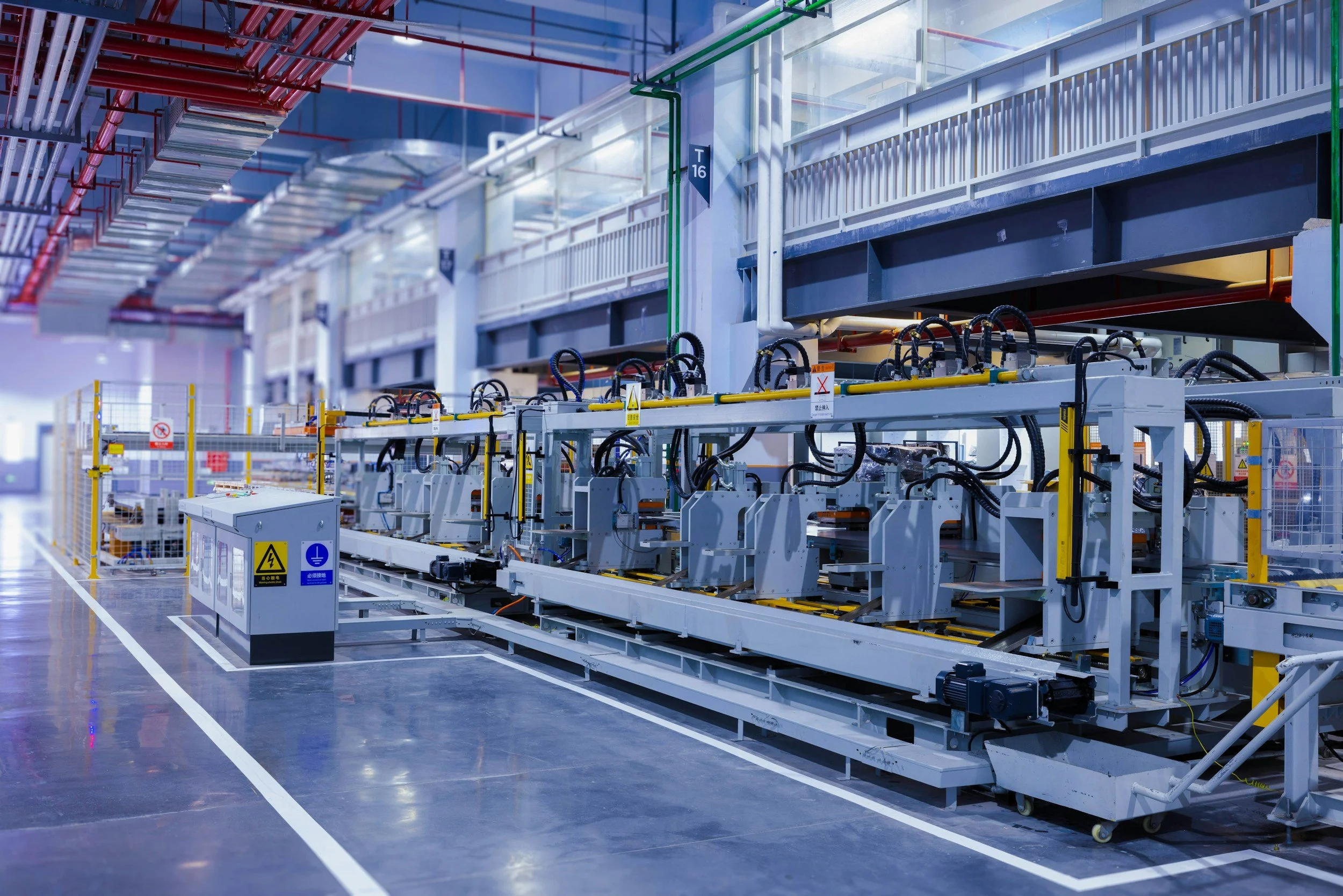
Remove grease, coatings, weld residue and contaminants from fabrication equipment, tooling and engineering machinery without abrasive media.
Engineering & fabrication
Surface preparation that respects the parent metal
Weld discolouration, spatter, mill scale, cutting fluid, marker, primer and light oxidation all sit between the fabricator and the next operation. Weld inspection, coating adhesion and dimensional accuracy each depend on how cleanly the surface underneath is presented.
The established methods all take something with them. Grit blasting removes parent material and leaves media in every seam, cavity and blind hole. Grinding changes geometry and heat-affects the area around it. Solvent wiping leaves a film that the coating then sits on top of rather than bonding through.
Dry ice blasting takes nothing but the contamination. Solid CO₂ pellets are accelerated at the surface; on impact each pellet sublimes, lifting deposits clear without abrading the substrate. No media. No dimensional change. No secondary waste.
Our equipment
The right equipment, and the judgement to use it
The difference between a controlled clean and a damaged surface is equipment that holds its settings. Hobby-grade units and undersized compressors drift in pressure and carry moisture, which on prepared steel means flash rust before the coating goes anywhere near it.
Kaeser and Boge compressors hold constant airflow at constant pressure. Tundra air dryers keep the supply dry, which matters more here than almost anywhere. M-class extraction and containment screening keep dislodged contamination out of the rest of the workshop.
Pellet size, flow rate and pressure are set against substrate and contamination: light enough to lift marker and cutting fluid from a machined face, aggressive enough to strip cured primer or heavy oxidation from structural steel.
Services
Every service, one method
Every service on this page uses the same dry ice CO₂ process. Non-abrasive, entirely dry, no media residue. Scope is set against your inspection and coating requirements.
Weld & pre-coat preparation
Weld cleaning & spatter removal
Discolouration, spatter and oxide removed from weld runs and heat-affected zones without grinding, without media and without altering the profile of the weld.
Pre-inspection & NDT prep
Surfaces prepared ahead of visual, dye penetrant, MPI or ultrasonic inspection, so the indication being read is the weld rather than the contamination on it.
Pre-coating & pre-paint prep
Oil, cutting fluid, marker and light oxidation removed so coating bonds to clean metal. No solvent film, no entrapped grit, no moisture.
Silicone & release agent removal
Silicone, release agent and anti-spatter removed from surfaces due for coating, welding or bonding, where residue would otherwise cause defects.
Cutting fluid & oil removal
Machined and fabricated components degreased dry, with no bath, no drying time and no waste stream to dispose of.
Workshop plant & tooling
Welding jigs & positioners
Locating faces, clamps, datums and tables cleaned of spatter and build-up, so fixtures continue to hold the position they were made to hold.
Robotic welding cells
Torch bodies, tips, shrouds, tooling and cell interiors cleaned in position, without fluid introduced into the cell.
Weld booths & screens
Booth walls, curtains, benches and screens cleaned of spatter, dust and fume deposit.
Extraction & fume ducting
Ductwork, fan housings and filter frames cleaned of fume deposit and oil mist, restoring designed extraction performance.
Bench & fixture surfaces
Layout tables, marking-off surfaces and fixture plates cleaned without abrasive damage to reference faces.
How we programme it
Batch component cleaning
Fabricated or machined batches cleaned to a consistent standard ahead of coating, assembly or dispatch.
On-site fabrication clean
Cleaning at the point of installation, where site welding, cutting and grinding have left contamination that has to be removed before coating.
Shutdown & handover clean
Structures, plant and steelwork cleaned to a demonstrable standard ahead of client inspection, sign-off or handover.
Rework & remediation
Failed coatings, misapplied primer or contaminated surfaces stripped back cleanly without damaging the substrate underneath.
Recurring workshop programme
A scheduled interval across jigs, cells, extraction and workshop plant so build-up never reaches the level that affects accuracy.
What it delivers
Four reasons fabricators specify this method
Anything that prepares a surface also has the potential to damage it. This method is defined by what it does not do.
Coating bonds to clean metal
No solvent film, no entrapped media and no moisture. The coating meets the substrate it was specified for.
Nothing dimensional changes
The process is non-abrasive, so machined faces, weld profiles and reference surfaces are cleaned rather than altered.
Indications you can trust
Clean weld runs and heat-affected zones make visual and NDT inspection read the work rather than the deposit.
No media to recover
No grit in seams, cavities or blind holes, no containment sweep-up, no hazardous fallout to dispose of.
Non-abrasive when it needs to be, aggressive when it needs to be, and dry throughout. The method serves the substrate, not the other way round.
Coverage
Nationwide, fully mobile
Compressor, dry ice blasters, M-class extraction and containment screening all travel with us. Workshop or installation site, there is no fixed geography.
In the workshop
Batch or single component
Components and assemblies cleaned to a consistent standard as part of your production flow, ahead of coating, inspection or dispatch.
On site
At the point of installation
Site welding and cutting leave contamination that has to come off before coating. We work in position, with containment and extraction managing the area.
Non-abrasive by definition
Prepared, not eroded
Grit blasting works because it is abrasive. That is also its cost. Every pass removes a little parent metal, changes the surface profile, and leaves media behind in exactly the places that are hardest to check: seams, cavities, threads, blind holes and internal corners.
Dry ice pellets are soft, and they do not survive the impact. They fracture contamination through thermal shock and mechanical energy, then return to atmosphere. The substrate is cleaned. It is not eroded.
For thin-gauge material, machined faces, weld profiles and anything with a tolerance attached, that distinction is the reason this method exists.
Substrate, contamination and required standard are assessed and agreed before any work is booked.
Assets we clean
What we clean in engineering and fabrication
Structural fabrication, precision engineering, sheet metal, pressure equipment and site installation. If the next operation depends on a clean surface, this is the work.
Get in touch
Request a process assessment
Tell us the substrate, the contamination and the standard the surface has to meet. We will assess the work and come back with a scope and a price.
- Assessment from a site visit or your photographs
- A written scope and quotation
- No obligation
Prefer to speak to a specialist? Call 01736 804118