
Based in Cornwall
Dry Ice Blasting for Power and Energy
Non-abrasive cleaning for turbines, generators, substations and power generation equipment while reducing operational downtime.
Power & energy
Outage windows are short, and the clean should not extend them
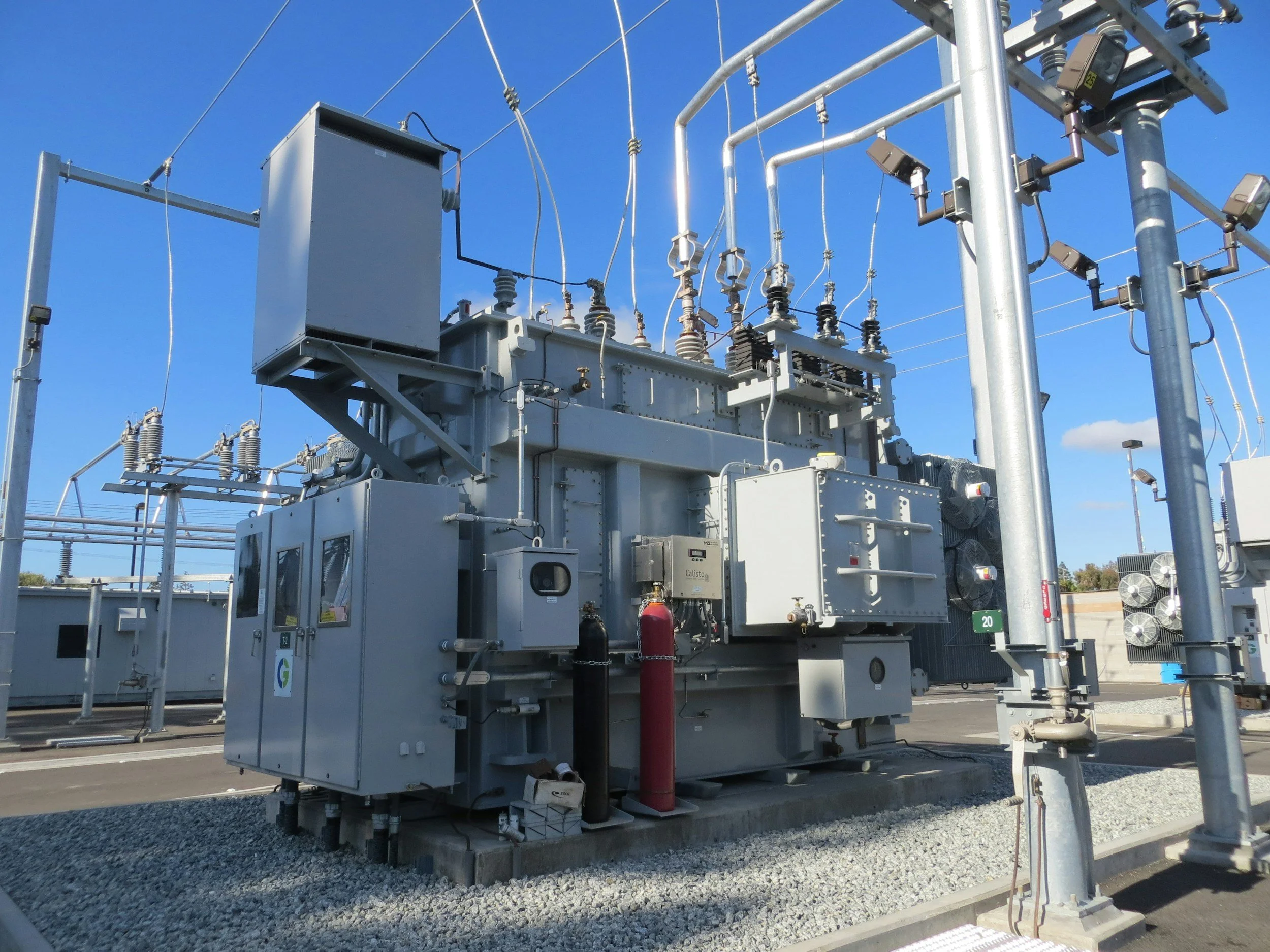
Generators, turbine housings, transformers, switchgear and heat exchangers accumulate oil, carbon, dust and airborne deposit. The result is efficiency lost to fouled cooling surfaces, insulation performance reduced by conductive film, and thermal derating on assets that were specified to run harder than they now can.
Every conventional option costs outage time. Water washing means drying time, effluent and a corrosion risk. Abrasive methods are unacceptable around close-tolerance components and insulation. Manual cleaning cannot reach winding depth, cooling passages or the back of a busbar.
Dry ice blasting is dry, non-conductive and non-abrasive. Solid CO₂ pellets are accelerated at the surface; on impact each pellet sublimes, lifting contamination clear and returning to atmosphere. Nothing introduced. Nothing to dry. Nothing to dispose of.
Our equipment
Dry air, constant pressure, inside the window
Outage work is unforgiving of equipment that cannot hold its output. Pressure that drifts through a long shift means an inconsistent result, and an air supply that is not properly dried means moisture introduced into the asset you were cleaning to protect.
Kaeser and Boge compressors hold constant airflow at constant pressure from the first minute to the last. Tundra air dryers keep the supply dry. M-class extraction and containment screening capture dislodged particulate at source rather than distributing it through a plant room.
Substrate, contamination, access and permit conditions are assessed first. Pellet size, flow rate and pressure are configured around them: gentle on insulation and coil varnish, firm on baked carbon and heavy oil deposit.
Services
Every service, one method
Every service on this page uses the same dry ice CO₂ process. Non-abrasive, non-conductive, entirely dry. Work is scoped and permitted against your safe system of work.
Generation assets
Generators & windings
Stator bores, rotor bodies, end windings and connection rings cleaned of dust, carbon and oil mist without solvent, moisture or abrasive contact.
Turbine housings & casings
Casings, covers, external surfaces and lagging interfaces cleaned of oil and carbon deposit without media entering close-tolerance areas.
Heat exchangers & coolers
Fins, tube faces, plate packs and air paths cleaned of fouling that is directly reducing designed heat rejection.
Gearboxes & nacelle interiors
Gearbox casings, cooling surfaces, structure and nacelle interiors cleaned in place, with no fluid introduced and no waste to recover from height.
Fuel & lube systems
Skids, pumps, filters, pipework and bunds cleaned of oil contamination so leaks become visible and inspectable.
Transmission & control
Switchgear & panels
Enclosures, chambers, mechanisms and contact areas cleaned dry, non-conductively, with no wash-down risk to adjacent equipment.
Transformers & bushings
Radiators, cooling paths, tank surfaces, bushings and insulator surfaces cleaned of dust, salt and oil film.
Busbars & insulators
Bars, supports and insulator surfaces cleaned of conductive film and tracking deposit, directly addressing flashover risk.
Cable trays & terminations
Trays, glands, terminal chambers and cable entries cleaned of dust and oil deposit in the routes where heat builds.
Control rooms & enclosures
Cubicles, backplates, relays and terminals cleaned without component removal, masking or moisture.
How we programme it
Outage & shutdown clean
Work packaged into the outage window and sequenced with other trades. Nothing is left wet, so re-energisation is not waiting on the clean.
Pre-inspection & NDT prep
Surfaces prepared ahead of thermographic survey, insulation testing, visual inspection or NDT, so results reflect the asset.
Insulation & winding clean
Targeted cleaning of windings, insulation surfaces and cooling passages where insulation resistance or temperature has moved in the wrong direction.
Post-fault soot removal
Carbon and soot from arcing, overheating or fire removed dry from enclosures and surrounding equipment, with no corrosive wash-down residue.
Recurring asset care
A scheduled interval agreed against your maintenance programme, so contamination never returns to the level that affects output.
What it delivers
Four reasons this method suits energy assets
Efficiency, insulation performance and outage length are the constraints. This method moves all three in the same direction.
Fouling removed, output restored
Clean cooling surfaces and clear air paths return heat rejection to design, which shows up directly in performance and derating.
No drying time
Because nothing is wet at the end of it, the clean does not sit on the critical path and the window stays the length it was planned to be.
Non-conductive throughout
No water, no solvent and no conductive residue. Tracking and surface film removed without compromising insulation.
No effluent, no media
No wash-water to contain or treat, no grit to recover, and no hazardous secondary waste stream to account for.
The CO₂ we use is reclaimed from existing industrial processes rather than produced for us. Combined with no water and no waste stream, that matters where ESG reporting and procurement frameworks assess environmental impact.
Coverage
Nationwide, fully mobile
Compressor, dry ice blasters, M-class extraction and containment screening all travel with us. There is no fixed geography. A site in Aberdeen gets the same process as one in Cornwall.
In outage
Inside the permitted window
Work programmed against your isolation and permit process, sequenced with other trades, and finished dry so re-energisation is not delayed.
Around live plant
Adjacent to energised equipment
Where isolation is impractical, containment and M-class extraction confine the working area so cleaning proceeds without exposing adjacent live equipment.
Inside the window
Cleaning that does not sit on the critical path
The constraint on outage work is almost never the cleaning itself. It is what the cleaning requires afterwards: drying time, moisture testing, effluent handling, media recovery, and a re-energisation decision that waits on all of it.
Dry ice removes that tail entirely. The pellets sublimate on impact, so there is nothing to dry, nothing to sweep up and nothing to dispose of. Extraction captures dislodged contamination as we work, and the asset is available the moment the permit closes.
That is why cleaning gets programmed into short windows that previously could not accommodate it, and why assets that were being cleaned every few outages start being cleaned every one.
Permit, isolation and method are agreed with your responsible engineer before mobilisation.
Assets we clean
What we clean in power and energy
Generation, distribution, renewables, standby power and energy from waste. Where the outage is short, the asset is valuable and water is not an option, this is the method that fits.
Get in touch
Request a process assessment
Tell us the assets involved, the permit conditions and when your next outage falls. We will assess the work and come back with a scope and a price.
- Assessment from a site visit or your photographs
- A written scope and quotation
- No obligation
Prefer to speak to a specialist? Call 01736 804118