
Based in Cornwall
Dry Ice Blasting for Agriculture
Efficient cleaning for agricultural machinery, harvesting equipment, tractors and processing facilities without water damage.
Agriculture
Machinery that spends its life in the worst conditions
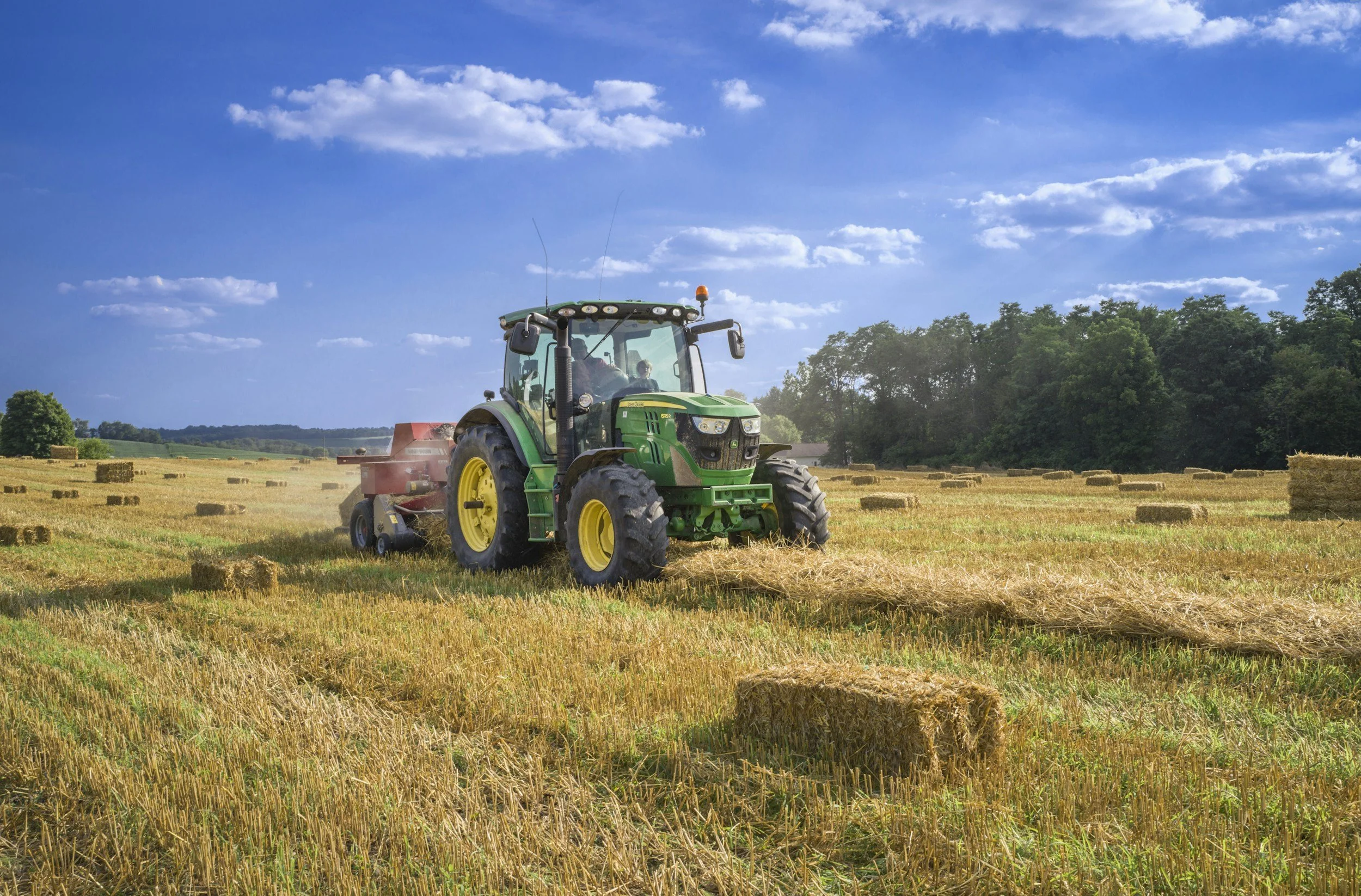
Compacted soil, crop residue, grease, slurry and salt build up across harvesters, tractors, sprayers, handling equipment and fixed plant. That build-up hides corrosion and developing wear, blocks cooling and radiator paths, and carries contamination from one crop, one field or one building to the next.
Pressure washing, the default answer, creates the next problem. Water is driven into bearings, seals, electrics and cavities, and the machine then goes back into a shed for months to corrode from the inside. It is slow, it generates run-off, and it never reaches the places that matter most.
Dry ice blasting introduces nothing. Solid CO₂ pellets are accelerated at the surface; on impact each pellet sublimes, lifting contamination away and returning to atmosphere. No water into the machine. No chemicals. No run-off to manage.
Our equipment
Industrial-grade air, brought to the yard
Agricultural contamination is heavy, compacted and often baked on, which is exactly where underpowered equipment fails. Pressure drops through the job, moisture enters the air stream, and what should be a dry clean stops being one.
Kaeser and Boge compressors hold constant airflow at constant pressure through a full day. Tundra air dryers keep the supply dry. M-class extraction and containment screening manage dislodged material, which matters in a livestock building or a grain store.
Every machine is assessed before configuration: substrate, contamination, age and condition. Pellet size, flow rate and pressure are set accordingly. Gentle on original paint, decals and wiring. Firm on compacted soil, slurry deposit and baked grease.
Services
Every service, one method
Every service on this page uses the same dry ice CO₂ process. No abrasives. No moisture. No chemicals. Whether it is a working combine or a vintage restoration, the machine is assessed individually.
Machinery
Harvesters & combines
Threshing areas, sieves, elevators, drives, engine bay and radiator packs. Crop residue and dust removed from the cooling and fire-risk areas without water entering bearings or electrics.
Tractors & loaders
Engine bay, transmission, chassis, arch areas and cab exterior. Years of grease, soil and salt removed without masking sensors or soaking the loom.
Balers & mowers
Chambers, rollers, knives, belts and drive assemblies cleaned of compacted crop residue, which is a fire risk as much as a maintenance one.
Sprayers & spreaders
Booms, tanks exteriors, nozzles, frames and hoppers cleaned of chemical residue and fertiliser deposit, dry, with no dilution or run-off.
Trailers & handling equipment
Chassis, floors, tipping gear, telehandlers and yard plant cleaned back to visible metal so corrosion is found rather than discovered.
Fixed plant & buildings
Grain stores & handling
Walls, floors, augers, elevators, conveyors and ducting cleaned of dust, residue and insect harbourage without introducing moisture into the store.
Livestock housing surfaces
Steelwork, penning, panels, feed barriers and ceiling voids cleaned dry, with no wash-down water to drain and no chemical residue in the building.
Feed systems & augers
Augers, hoppers, mixers and feed lines cleaned of compacted residue and mould growth, without moisture that would cause more of both.
Ventilation & extraction
Fans, ducting, inlets and filter frames cleaned of dust and residue, restoring designed airflow in buildings that depend on it.
Mould remediation
Surface mould removed from timber, steel and panelling without the water that caused it. Substrate left dry and ready for inspection or treatment.
How we programme it
Pre-season recommissioning
Machinery cleaned, inspected and made ready before the season rather than during it, when a discovered fault becomes a lost day.
Post-harvest clean-down
A full clean-down before storage, dry, so the machine goes into the shed without water sitting in cavities and bearings for the winter.
Biosecurity clean-down
Machinery, trailers and handling equipment cleaned between fields, crops, holdings or contracts, without wash-water to contain.
Pre-sale & valuation prep
Machinery prepared for sale, trade-in or valuation, where visible condition changes the number on the invoice.
Vintage machinery restoration
Original paint, decals, castings and transfers exposed rather than blasted off. Non-abrasive throughout, which is why restorers use it.
What it delivers
Four reasons it beats a pressure washer
The comparison is not cleanliness. It is what each method leaves behind in the machine.
No water left behind
Nothing is driven into bearings, seals, cavities or electrics, so the machine goes into storage dry rather than quietly rusting.
Clean-down without run-off
Contamination is removed and captured rather than washed across the yard, with no wash-water to contain or dispose of.
Condition made visible
Machinery cleaned back to visible metal and original finish inspects better, sells better and hides less.
Radiator and fire risk cleared
Crop residue and dust removed from radiator packs, engine bays and drives, which is thermal performance and fire risk together.
Removing build-up restores airflow and cooling, extends component life, and eliminates the combustible residue that accumulates around exhausts, bearings and drives.
Coverage
Nationwide, fully mobile
Compressor, dry ice blasters, M-class extraction and containment screening all travel with us. We work in the yard, in the shed or in the building. There is no fixed geography.
On the holding
We come to the machine
Fully mobile and demountable, so the work happens where the machine is. No transport, no hire, and no equipment out of action longer than it needs to be.
Fleet & contract work
Multiple machines, one visit
Contractors, estates and larger holdings are programmed as a batch, sequenced around the season so machinery is ready before it is needed.
Dry, and it stays dry
The machine goes back in the shed dry
A pressure-washed machine looks clean and is, in one respect, in worse condition than before. Water sits in box sections, behind panels, inside bearing housings and around connectors. Six months in a shed later, that water has done more damage than the mud it replaced.
Dry ice introduces no moisture at all. The pellets sublimate on impact and return to atmosphere, so the surface is clean and dry the moment we stop. Electrical components need no masking. Bearings and seals need no protection.
For anything going into winter storage, or anything with original paint and decals worth keeping, that is the whole argument.
Access, water and power requirements are confirmed before the visit. In most cases we bring everything with us.
Assets we clean
What we clean in agriculture
Arable and livestock farms, estates, contractors, agricultural dealers and vintage machinery restorers. If the machine is valuable, awkward to clean, or heading into storage, it is the kind of work we do.
Get in touch
Request a process assessment
Tell us what needs cleaning, where it is and when you need it back in use. We will assess the work and come back with a scope and a price.
- Assessment from a site visit or your photographs
- A written scope and quotation
- No obligation
Prefer to speak to a specialist? Call 01736 804118