
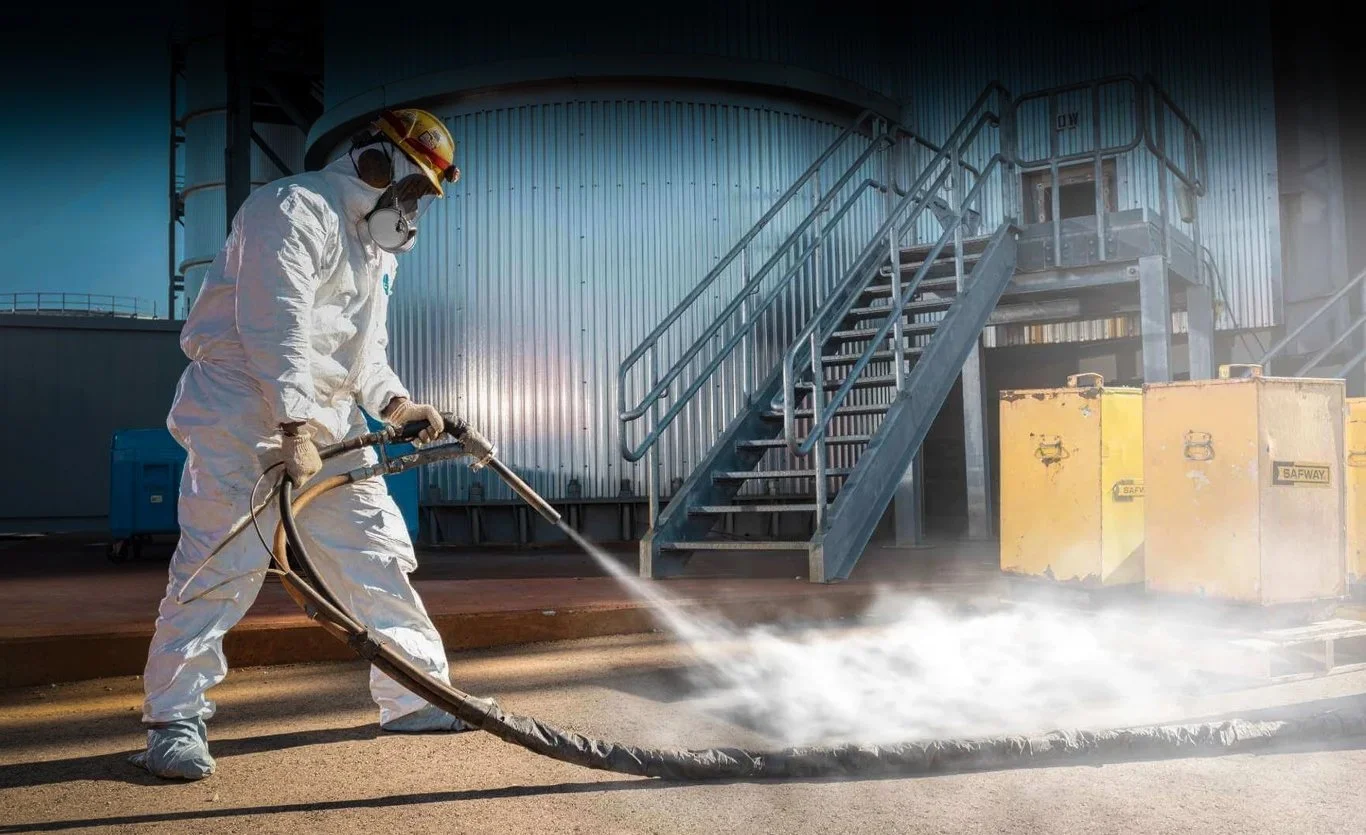
Precision cleaning for critical environments
Dry Ice Blasting Specialists in Cornwall
We operate where contamination, downtime and risk cannot be tolerated. No abrasion. No chemicals. No secondary waste.
Cleaning is no longer cosmetic. It's operational.
When contamination builds up on equipment, it does more than look bad. It shortens the life of machinery, drags down output, raises the risk of fire and puts compliance at risk. In the places we work, a poor clean is not an inconvenience. It is a shutdown. Most cleaning companies have one method and use it on everything. We work the other way round. We look at the surface, the type of contamination and how the equipment is used, then set the process to match. The method fits the job, not the job the method.
We are based in Cornwall and work as a fully mobile service. We bring the equipment and the process to you, across every industry we serve and right across the UK.
Reduce Risk
We remove the combustible residue, contamination and biological hazards that cause fires, faults and failures, before they become your problem.
Asset Preservation
We clean original surfaces, coatings and structure back to their best, without causing new damage in the process.
Performance Optimisation
We restore airflow, cooling and efficiency to equipment that cannot be switched off, so it runs the way it should.
Operational Efficiency
We fit around your maintenance, inspection and restart schedules, so cleaning costs you as little production time as possible.
TECHNOLOGY
The technology that sets us apart
Dry ice blasting (also called CO₂ precision cleaning) uses compressed air to fire small pellets of frozen carbon dioxide at the surface being cleaned. The instant each pellet lands it sublimes, turning straight from a solid into a gas and expanding to around 800 times its size. That rapid burst of cold and energy lifts oil, grease and built-up contamination off the surface, without anything abrasive ever touching it.
Nothing is added to the surface. Nothing is left behind except the dirt we have removed.
So despite the name, this is not blasting in the usual sense. There is no grit, no leftover blasting media and nothing scraping or wearing the surface. What we are really doing is precision cleaning, right down to the molecular level.
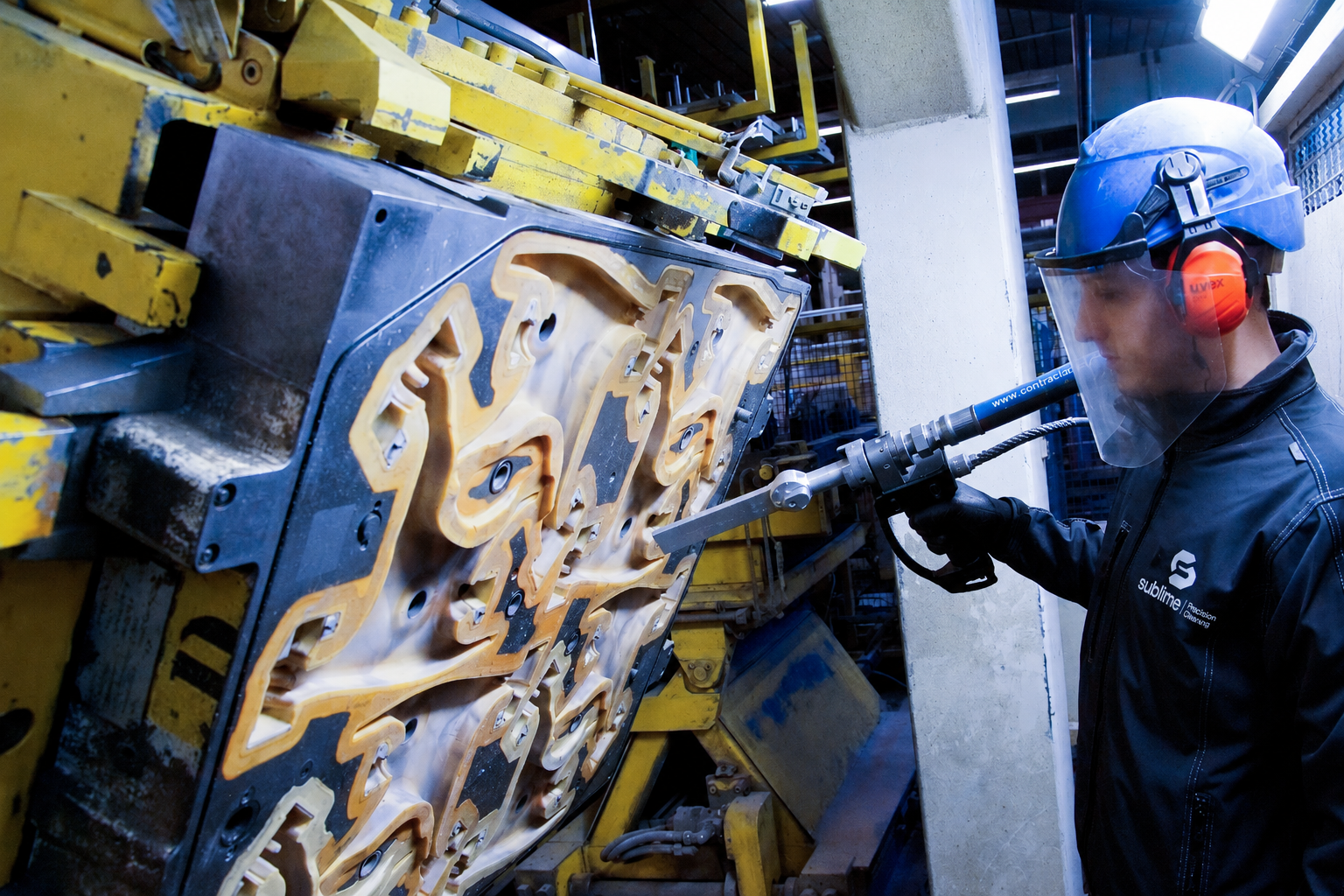
Set up for the job, not the job for the setup.
The three things that shape a dry ice clean, the size of the pellets, how densely they are fired and the air pressure behind them, can all be adjusted. We set them to suit each surface and each type of contamination, and every nozzle has a soft silicon bumper so it cannot mark the equipment it is cleaning. A specialist assesses every job and trained technicians carry it out. We are also working towards ISO accreditation, because the environments we clean demand that standard, and so do we.
Cleaned in place. Contained. No trace left behind.
Where airborne contamination cannot be allowed to spread, such as food production, pharmaceutical manufacturing and clean rooms, we work inside fully sealed enclosures. The area is closed off before we start, extraction runs the whole time to catch particles at the source, and everything is recovered with M-class vacuums, the highest filtration rating for hazardous dust. Nothing escapes the work area. No drying time. No residue. A clean surface and a clear site.
Built for contamination-critical environments.
Because dry ice turns straight to gas on impact, it leaves no grit, no moisture and no chemical residue. Equipment can be cleaned where it stands, often while it is still running. That removes the need to strip it down, along with the contamination risk that comes with any method using water or solvents.
Less fire risk. Less contamination risk.
Combustible dust, grease and built-up residue are among the leading causes of industrial fires and unplanned downtime. Removing them before they cause a problem is not maintenance. It is risk management.
In Practice
The same technology. Three very different environments.
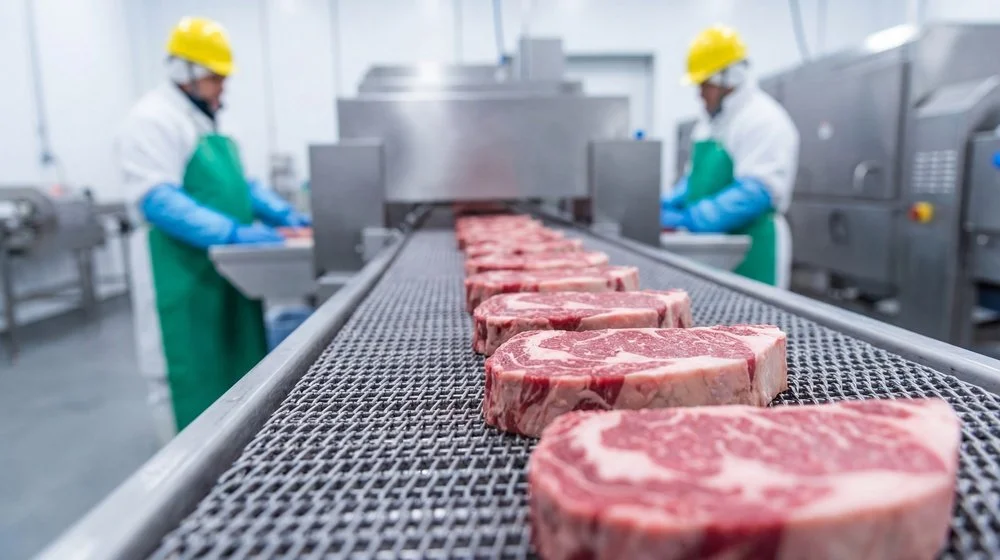
FOOD PRODUCTION
A conveyor running a continuous shift.
Grease, protein residue and carbonised buildup accumulate on the belt, drive mechanisms and frame. Shutting down for cleaning means lost production. Conventional methods introduce moisture to food contact surfaces and require full disassembly.
We clean the conveyor while it runs. Every surface angle accessible. No disassembly. No drying time. No chemical residue on food contact surfaces. Back in full production the moment we finish.
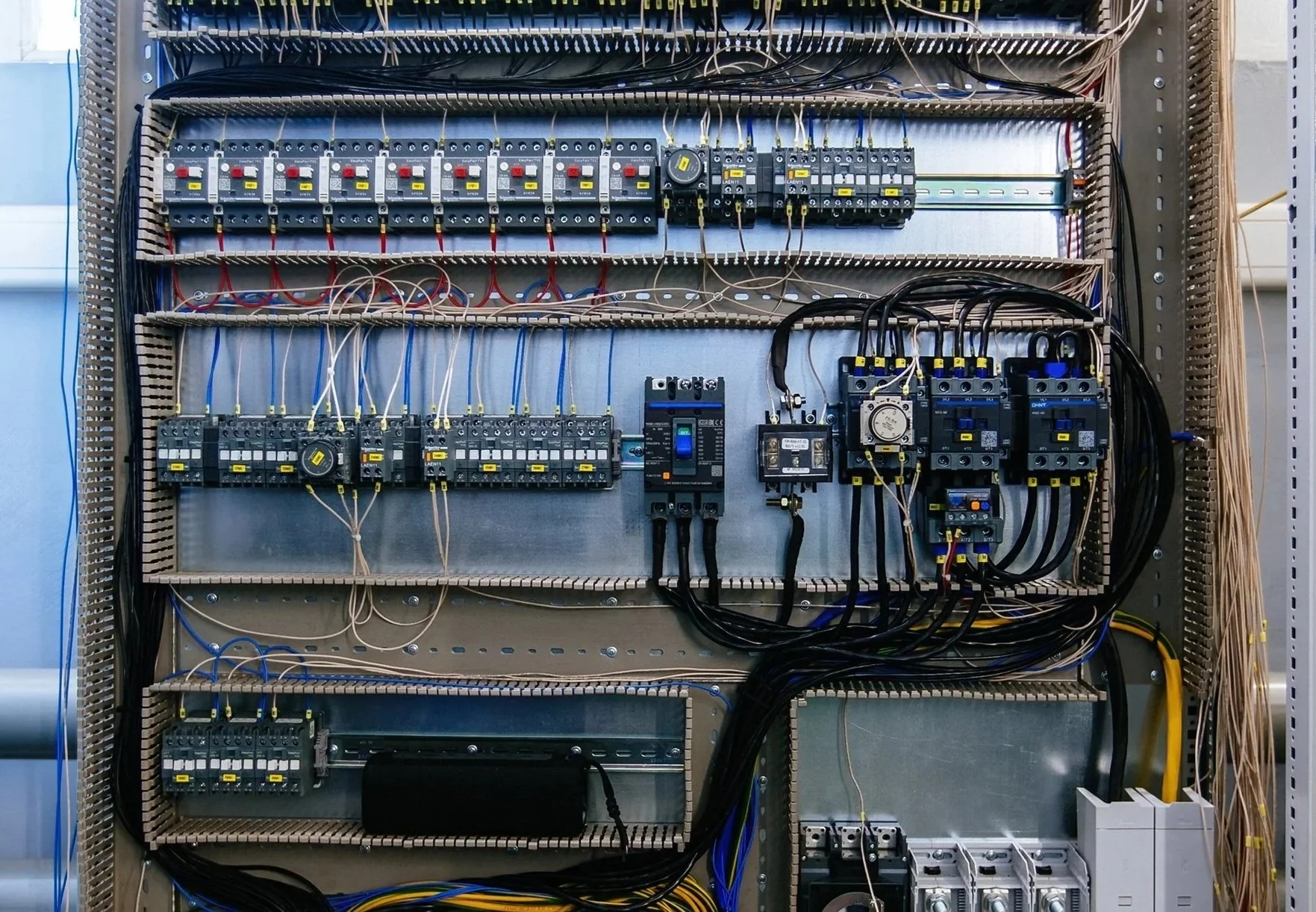
ELECTRICAL EQUIPMENT
A switchgear cabinet that hasn't been cleaned in years.
Dust and carbon buildup on insulation and contacts reduces dielectric strength and raises the risk of tracking faults, overheating and eventual failure. The standard response is to isolate the board — which means production stops.
Because dry ice is non-conductive, we clean the cabinet live with no shutdown required; restoring full electrical integrity without introducing a single drop of moisture.
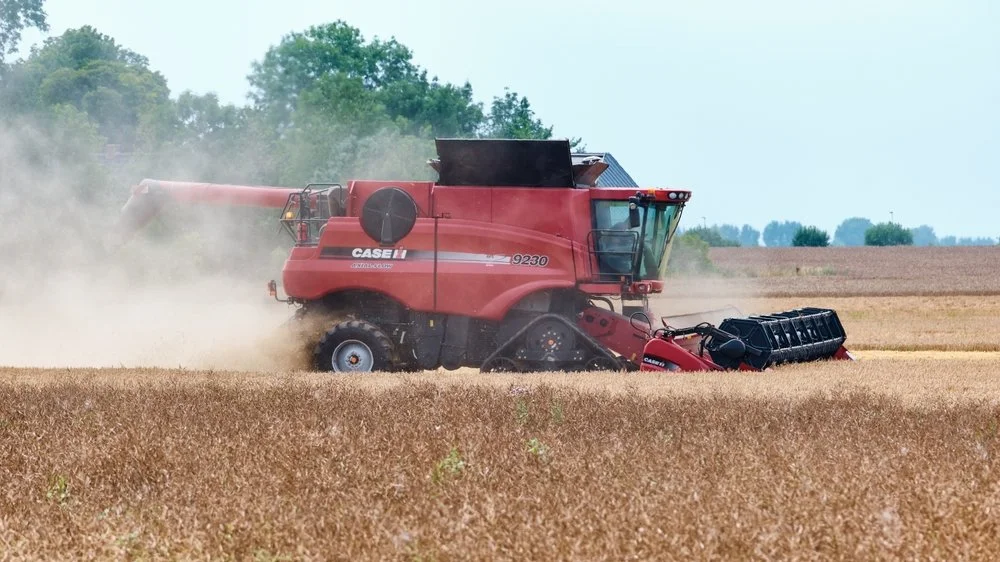
AGRICULTURE
A combine harvester worth £500,000.
Crop dust, chaff and debris accumulate deep within the machine around bearings, belts and exhaust surfaces. In dry harvest conditions that build-up can ignite within hours. Compressed air moves the problem. Pressure washing creates another one.
Dry ice blasting reaches into every cavity and bearing housing without water, without residue, and without risk to complex electronics. The fire risk doesn't get managed. It gets eliminated.
A cleaner process. In every sense

The CO₂ we use is reclaimed from existing industrial processes, captured before it enters the atmosphere and repurposed as a precision cleaning medium. It does not add to atmospheric emissions. It reduces them.
Because each pellet sublimates on impact, there is no blasting media to collect, no wastewater to manage and no chemical waste stream to dispose of. The only material removed from site is the contamination itself.
No water. No chemicals. No secondary waste. For operations with sustainability commitments, ESG reporting requirements or procurement frameworks that assess environmental impact, this is the only industrial precision cleaning method that produces zero secondary environmental footprint.
Also for automotive
We work on vehicles too
The same precision dry ice process, applied to high-value, classic and performance vehicles. Non-abrasive, non-destructive and assessed individually, from Porsche 911s and Jaguar E-Types to Land Rover Defenders.
- Engine bay cleaning, fully non-conductive
- Underbody and chassis decontamination
- Corrosion protection across four tiers
Mobile across the UK, or bring your vehicle to our Cornwall workshop and take the keys to a classic Porsche while the work is done.
Explore the automotive serviceEvery environment is different. Tell us about yours.
Tell us about the environment, the contamination and the outcome you need. We will tell you whether dry ice blasting is the right process, and exactly how we would configure it.
Message us directly for a quick response.
Open WhatsApphello@sublimeprecision.co.uk
Send an emailContact page
Request a process assessment in full.
Go to contact page